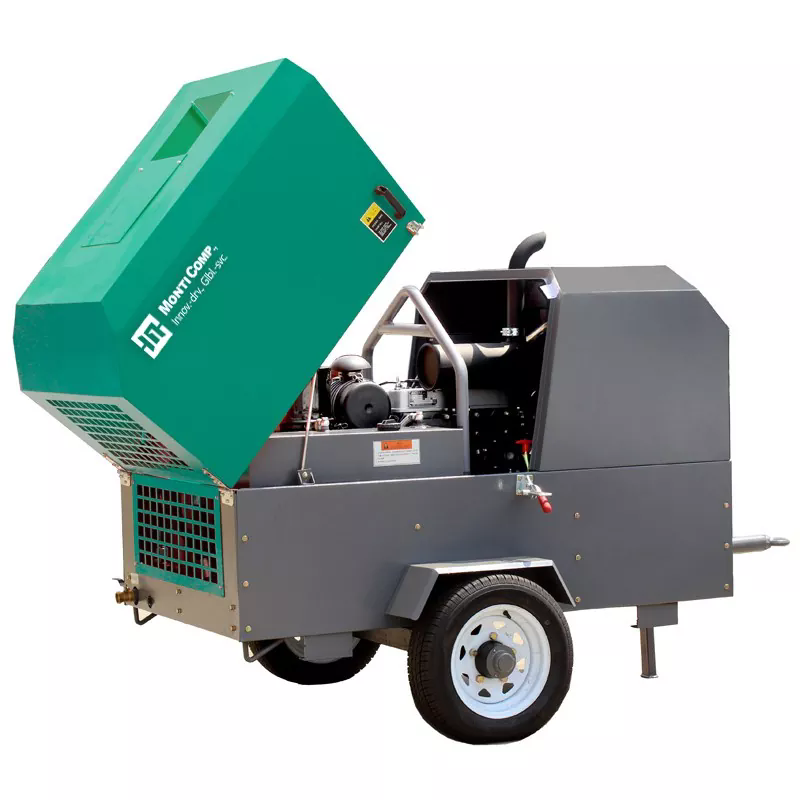
Article Summary: This article explains how a mobile air compressor works, its core components, real-world applications, and how to choose the right model. It is designed to help users overcome common issues such as unstable air supply, portability limitations, and maintenance difficulties. Whether you are in construction, automotive repair, or industrial maintenance, this guide will help you make an informed decision and improve operational efficiency.
Article Outline
-
Definition and core concept of mobile air compressors
-
Working mechanism and airflow process
-
Major components and their functions
-
Industry applications and use cases
-
Selection criteria and comparison table
-
Maintenance strategies and troubleshooting
-
Market trends and portable air system evolution
-
Brand insight and service support from Dream
What Is a Mobile Air Compressor?
A mobile air compressor is a portable device designed to convert power (typically from diesel engines, gasoline engines, or electric motors) into compressed air. Unlike stationary compressors, mobile versions are mounted on trailers, trucks, or compact frames, allowing them to be transported easily across job sites.
The key advantage of mobility is flexibility. Users can bring compressed air directly to construction sites, remote maintenance zones, mining operations, or emergency repair locations without relying on fixed infrastructure.
How a Mobile Air Compressor Works
The working principle of a mobile air compressor is based on a simple cycle: air intake, compression, storage, and delivery. However, the engineering behind this process is highly optimized for efficiency and durability.
-
Air Intake: Ambient air is drawn through a filter system.
-
Compression Stage: The air is compressed using a rotary screw or piston mechanism.
-
Cooling System: Heat generated during compression is reduced using oil or air cooling systems.
-
Storage & Regulation: Compressed air is stored in a tank and regulated for stable output pressure.
-
Delivery: The compressed air is delivered through hoses to pneumatic tools or systems.
This continuous cycle ensures consistent airflow, even under demanding working conditions.
Key Components Explained
|
Component
|
Function
|
|
Engine
|
Provides mechanical energy for compression
|
|
Air End
|
Core unit that compresses air
|
|
Air Filter
|
Removes dust and contaminants
|
|
Cooling System
|
Prevents overheating during operation
|
|
Control Panel
|
Monitors pressure, temperature, and output
|
|
Storage Tank
|
Holds compressed air for stable supply
|
Each component plays a critical role in ensuring performance stability and energy efficiency.
Common Applications
Mobile air compressors are widely used across multiple industries:
-
Construction sites for powering pneumatic drills and jackhammers
-
Road maintenance and asphalt repair
-
Mining operations in remote environments
-
Oil and gas field servicing
-
Emergency repair and disaster response
-
Automotive tire inflation and mobile workshops
Their portability ensures that compressed air is available wherever and whenever it is needed.
Buying Guide
Choosing the right mobile air compressor depends on operational requirements. Below is a simplified comparison table:
|
Factor
|
Low Demand Use
|
High Demand Use
|
|
Air Flow (CFM)
|
Below 100 CFM
|
Above 200 CFM
|
|
Power Source
|
Electric
|
Diesel Engine
|
|
Portability
|
Compact wheels
|
Trailer-mounted
|
|
Duty Cycle
|
Intermittent
|
Continuous operation
|
Selecting the right configuration helps reduce operational costs and improves efficiency.
Common Problems & Solutions
-
Low pressure output: Often caused by clogged filters or air leaks.
-
Overheating: Usually due to insufficient cooling or high ambient temperatures.
-
Excessive noise: Can result from worn mechanical components.
-
Fuel inefficiency: May indicate poor engine tuning or load imbalance.
Regular inspection and preventive maintenance significantly reduce downtime and repair costs.
Maintenance Tips
-
Replace air filters regularly
-
Check oil levels before each operation
-
Inspect hoses for leaks or cracks
-
Clean cooling system fins
-
Monitor pressure gauges during operation
A structured maintenance routine ensures long-term reliability and reduces unexpected breakdowns.
Why Modern Mobile Compressors Matter
Modern mobile air compressors are designed with improved fuel efficiency, lower emissions, and smart monitoring systems. Digital control panels allow operators to track performance in real time, reducing human error and optimizing output.
Additionally, advancements in noise reduction and vibration control make them more suitable for urban and sensitive environments.
Why Choose Dream
When selecting a reliable mobile air compressor solution, engineering quality and long-term support are essential. Dream provides advanced mobile air compressor systems designed for durability, efficiency, and field adaptability across multiple industries.
If you are looking for tailored solutions, technical support, or product customization, Dream contact us to discuss your project requirements and receive professional guidance for your application needs.
FAQ
Q1: What fuel types are used in mobile air compressors?
Most models use diesel, gasoline, or electric power depending on application requirements.
Q2: How long can a mobile air compressor run continuously?
Industrial-grade models can operate for extended periods, often exceeding 8–12 hours depending on load.
Q3: Are mobile air compressors suitable for indoor use?
Electric models may be used indoors with proper ventilation, while fuel-powered units are typically outdoor-only.
Q4: What is the lifespan of a mobile air compressor?
With proper maintenance, high-quality units can last 8–15 years or more.
Q5: How do I choose the right size?
It depends on airflow requirements, tool compatibility, and operating environment.