Stainless Steel D Shackle Distributor Shares Expert Advice on Selecting Durable Rigging Hardware
2026-10-17
Every rigging project hinges on hardware you can trust—and few components carry more responsibility than the humble D shackle. Yet not all stainless steel is equal, and a distributor's insight can mean the difference between safe lifting and a costly failure. Wanluo shares the expert criteria they use when selecting durable rigging hardware, from alloy composition to finish quality. If you've ever wondered what separates a premium shackle from a box-store substitute, keep reading.
Why Stainless Steel Grades Are Not Equal
The term "stainless steel" often gets treated as a single material, but that assumption falls apart the moment you compare a kitchen sink to a chemical storage tank. Behind the shared name lies a family of alloys whose differences in chromium, nickel, molybdenum, and carbon create dramatic shifts in corrosion resistance, strength, and workability. A grade like 304 might handle everyday moisture without issue, yet the same environment can pit and weaken a lower-cost 430. These aren't minor variations; they're the difference between a component lasting decades or failing within months.
Metallurgical choices drive these performance gaps. Adding molybdenum, for instance, dramatically improves resistance to chlorides and salt exposure, which is why 316 outperforms 304 in marine or coastal settings. On the other end, high-carbon stainless grades trade some rust resistance for hardness, making them ideal for knife blades but poor choices for welded structures where carbide precipitation can cause cracking. Even within a single grade number, variations in heat treatment, cold working, and surface finish can push real-world behavior far from textbook expectations.
That's why selecting stainless steel based solely on "it's stainless" leads to costly mismatches. Engineers and fabricators must weigh the specific agents a part will encounter, from acidic foods to industrial solvents to temperature swings. A grade's certification only confirms its composition, not its suitability for every task. The real expertise lies in reading the environmental and mechanical demands, then matching them to the alloy's particular strengths and known weaknesses.
Decoding Load Limits Without the Guesswork
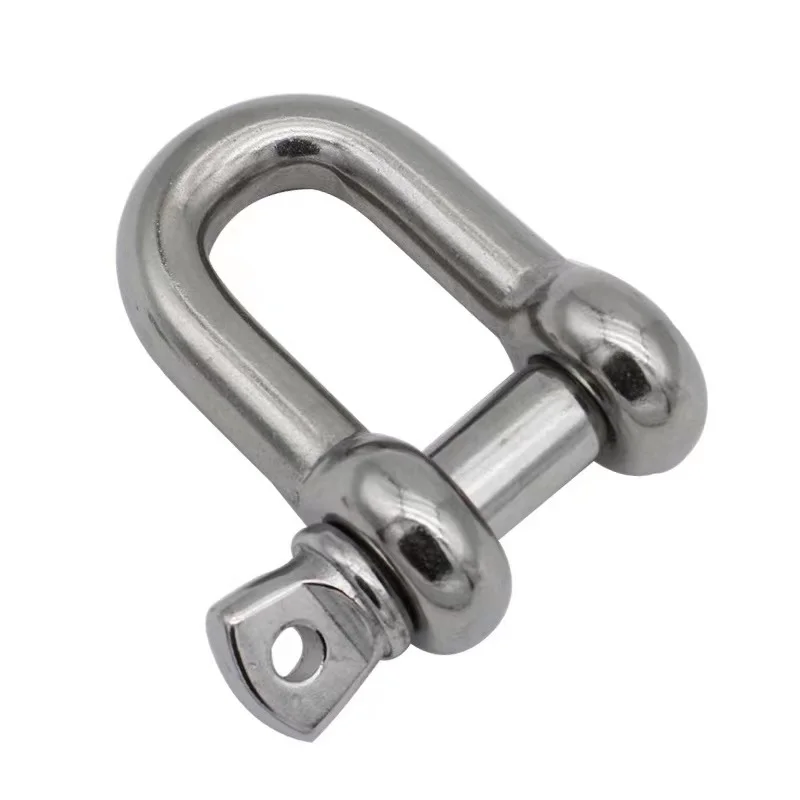
Most load ratings are born on a test bench under conditions that rarely show up on a job site. A shackle rated at 4.75 tonnes performs that way only when the load hangs straight, moves slowly, and pulls along its intended axis. Introduce a sharp angle, a shock load, or a worn pin, and the real capacity drifts downward in ways the stamp can't capture.
The fastest way to decode a load limit is to trace the force from hook to anchor. A vertical lift keeps the math close to the label. As soon as slings form an angle, the tension in each leg jumps—a 60-degree included angle can push each side well beyond half the load. Instead of guessing, sketch the triangle and check the derating table. Numbers change faster than intuition expects.
Condition matters just as much as geometry. Corrosion, heat exposure, UV damage, and repeated drops quietly eat away at the margin the original rating assumed. Treat the printed limit as a baseline, not a guarantee. When the gear has history or the site throws in variables the test bench never saw, lower the working load before the hardware does it for you.
Pin Design Details That Affect Daily Use
The shape of a pin's head might seem trivial until you try to press it with wet fingers or a gloved hand. A slightly domed top with a fine matte texture offers a surprising amount of grip, while overly polished or flat heads tend to slip. For anything used outdoors, a recessed center or a subtle ridge around the edge makes a real difference without adding bulk.
Length and taper matter more than most people expect. A pin that is too short fails to anchor in thick fabric, and one that is too long can scratch skin or snag on loose threads. A gradual taper from the tip to the shank reduces resistance when pushing through dense materials like denim or canvas, and it also prevents the pin from bending under repeated use.
The material finish plays an understated role in daily handling. Brushed stainless steel resists fingerprints and stays cooler against the skin compared to high-gloss chrome. If the pin is used near salt water or in humid environments, a micro-coated surface or a slightly harder alloy prevents the dull gray patina that forms after a few weeks of regular contact.
Corrosion Resistance Beyond a Shiny Surface
Most people mistake corrosion resistance for a mirror-like finish or a fresh coat of paint, but real protection lives in the microscopic layers underneath. A polished exterior can hide pitting, intergranular attack, or galvanic mismatches that quietly eat away at load-bearing joints. Engineers who chase only surface gloss end up paying for it in premature flange failures and weeping weld seams. The durable answer isn’t brighter chrome—it’s choosing alloys and coatings that form stable, self-healing oxide barriers, then validating them under cyclic salt spray and humid thermal swings, not just a showroom spotlight.
There’s also a mismatch between how corrosion gets tested and how it actually happens in the field. Lab panels sit flat, fully exposed, with uniform drainage; real equipment has crevices, fasteners, and standing water pockets where oxygen depletion cells form. A stainless steel sink might look flawless after five years while the hidden bracket behind it crumbles from chloride stress corrosion. So the better question isn’t “does it stay shiny?” but “does it keep its structural integrity when the coating is scratched, the gasket leaks, and the maintenance crew skips a rinse cycle?”
That shift in thinking changes material selection entirely. Instead of defaulting to 304 stainless because it’s familiar, you might lean toward duplex grades for coastal brackets, or a zinc-rich primer under a sacrificial topcoat for buried pipe supports. Shot peening and passivation matter more than polish. And the real payoff isn’t a cleaner inspection report—it’s fewer unplanned shutdowns, less replacement stock on the shelf, and a component that outlasts its warranty without demanding constant cosmetic touch-ups.
When to Retire a Shackle Before It Fails
A shackle rarely gives you a clear warning before it lets go, so retirement calls happen during inspection, not after an incident. Look for measurable signs: a bent pin, a body opening that has spread even a few thousandths of an inch, hook wear beyond 10% of original diameter, or deep gouges from chain or sling contact. Corrosion pitting is just as serious as a crack because it removes load-bearing metal and invites fatigue. If any of these conditions appear, the shackle has already moved past its safe working life.
Load history matters more than age. A shackle that has been side-loaded, shock-loaded, or pulled at an angle beyond the manufacturer's rating can fail internally without showing obvious distortion. Heat exposure from welding, grinding, or a nearby fire changes the temper of the steel, making it brittle. When there is any chance of overload or heat damage, retire the shackle instead of trying to prove it is still good. Dye penetrant or magnetic particle testing can reveal cracks, but a cracked shackle should never be repaired or returned to service.
Set a replacement interval based on how often the shackle cycles through loaded and unloaded states, not just calendar time. In high-cycle lifting or marine environments, active shackles may need retirement every few months. Mark each shackle with a unique ID, log inspections, and remove any unit that cannot be traced to its last known safe condition. Waiting until a shackle fails means accepting the cost of dropped loads, damaged equipment, and possible injury. Retire it before that point arrives.
Smart Questions to Ask Before Buying Rigging
A spec sheet can tell you the working load limit, but it rarely tells you how that number holds up on a real job site. Ask the supplier what happens when the angle changes or the load shifts suddenly. Do they account for shock loads, or only static lifts? If you work around heat, chemicals, or saltwater, find out whether the gear has been tested in those conditions. Material traceability matters, too. A reputable manufacturer should be able to tell you exactly where the steel or synthetic fibers came from and what batch they belong to.
Don't stop at the price and the rated capacity. Dig into how the equipment is tested before it leaves the factory. Will they provide a load test certificate for each item, or just a generic compliance statement? If a sling fails in the field, what kind of support will you actually get? Ask about warranty terms in plain language, not the fine print. You also want to know whether replacement parts will be available five years from now, not just when the purchase is fresh.
Finally, think about how the new rigging will fit with what you already own. Will those shackles actually mate properly with your existing hooks, or will you need adapters that add another failure point? Ask the vendor what daily inspections should look like and what wear patterns signal that a piece needs to be retired. A good supplier won't just sell you hardware; they'll walk you through the inspection points and explain what a frayed sling or a deformed eye really means.
FAQ
Inspect the pin thread form before anything else. A rolled thread lasts longer than a cut thread because it compresses the metal grain instead of slicing through it. Also ask about the passivation process—if it was skipped, the surface will start showing tea staining within weeks even on true 316 stainless.
Request the mill test report, not just a verbal guarantee. The report should list molybdenum content around 2 to 3 percent—that’s the element that gives 316 its chloride resistance. If they hesitate or say it’s on file but never send it, treat the shackle as 304 at best.
They assume the stamped WLL is the breaking strength. It isn’t. The working load limit already includes a safety factor, usually 5 or 6 to 1 for lifting gear. So a shackle stamped 3.25 tonnes will not snap at 3.3 tonnes, but it’s not designed to be loaded anywhere near the failure point repeatedly.
The difference often comes down to forging quality and batch testing. Some manufacturers forge each shackle and then proof load test every single piece, while others only test random samples. Also, look for a proper quench and temper cycle; some cheaper versions are just air cooled after forging, which leaves the metal softer and more prone to deformation.
If the pin or the bow shows any visible stretch, bend, or a gap that wasn’t there before, retire it immediately. Stainless work hardens under overload, which means the next failure could be sudden and without warning. A quick dye penetrant test on the crown area can reveal hairline cracks you can’t see with the naked eye.
Wash them with fresh water after every use in saltwater, but don’t stop there. Dry the pin threads and apply a thin film of marine-grade anti-seize, not regular grease, because regular grease can trap chlorides against the metal. Every few months, disassemble the shackle and check the thread engagement—if the pin wobbles even slightly when hand-tightened, replace the set.
Galling is a cold welding effect between two stainless surfaces under pressure. It’s worse when you spin the pin quickly or force it. To prevent it, clean both threads before assembly, use a nickel-based anti-seize, and always turn the pin slowly by hand first. If it starts to bind, back it out completely and clean the threads again.
At minimum, ask for a certificate of conformity and a batch test certificate for proof load. For lifting applications, many regions require the shackle to meet ASME B30.26 or EN 13889. Some distributors also offer third-party magnetic particle inspection on request. If nobody can show you a physical test report, keep looking.
Conclusion
A stainless steel D shackle distributor will quickly point out that stainless grades are far from interchangeable. The choice between 304 and 316, for example, changes corrosion behavior and strength retention in ways that printed specs rarely capture. Load limits also deserve more than a quick glance at a stamped number—pin fit, body geometry, and even how the shackle was forged affect whether it can actually handle what the tag claims. Small pin details, like thread engagement or cotter pin clearance, determine whether a shackle stays secure or becomes a daily frustration.
Real corrosion resistance is found below the surface, in the absence of crevices and inclusions that invite pitting, not in a mirror finish. That hidden damage is why smart riggers retire shackles based on deformation, cracks, or worn pins rather than waiting for visible failure. Before buying, ask a distributor how they verify material traceability, whether they batch-test working load limits, and what environments their shackles have actually survived. A supplier who can walk you through those details—and explain why a screw pin might beat a bolt-type pin for your specific lift—is more valuable than a catalog full of shiny hardware.
Contact Us
Contact Person: Shane
Email: [email protected]
Tel/WhatsApp: 8613357785029
Website: https://www.wanluohardware.com