ODM HVAC Retrofit: Smart Strategies for Efficient Building Upgrades
2026-09-30
Retrofitting an HVAC system isn't just about replacing aging equipment—it's about rethinking how a building breathes, consumes energy, and responds to its occupants. For facilities managers and building owners, the pressure to cut costs and carbon footprints has never been higher. That's where Tongbaote steps in. In this post, we unpack the smart strategies behind ODM HVAC retrofits, from load-matching algorithms to staged commissioning, so you can upgrade your building's efficiency without tearing down walls or blowing your budget.
The First Mistake in ODM HVAC Retrofits: Ignoring Real Loads
In ODM HVAC retrofit work, the first thing that goes wrong is usually not the equipment itself but the assumption behind it. Engineers pull out the original design documents, see a cooling load of 400 kW, and spec a replacement chiller to match. But that number was calculated years ago under completely different operating conditions. Occupancy has changed, lighting has been upgraded to LED, new machinery throws off heat, or the building envelope has been modified. None of that shows up in the old paperwork. The result is a system that's either oversized and short-cycling or undersized and struggling to keep up.
Take a typical office building from the early 2000s. The original HVAC design assumed 10 watts per square foot for equipment loads, but today's tenants run dense server racks, multiple monitors per desk, and 24/7 operations in some suites. If the retrofit skips a real load survey and just swaps out the old unit for a similarly rated one, the new equipment will never hit its efficiency sweet spot. Compressors cycle on and off too frequently, humidity control suffers, and energy bills stay high despite the "upgrade." The building owner ends up blaming the new equipment when the real problem was ignoring how the building is actually used.
Before any equipment is ordered, the existing system needs a proper load assessment. Install temporary data loggers on the current HVAC system for at least one to two weeks, covering both occupied and unoccupied periods. Record chilled water flow, supply and return temperatures, electrical demand, and indoor conditions. Then analyze the load profile, not just the peak but the part-load distribution. Only after you know the real thermal and ventilation loads can you right-size the new equipment, set up staging sequences, and avoid the endless cycle of overcorrection. In retrofit work, guessing based on nameplate ratings or old drawings is the fastest way to waste money.
Don't Replace Oversized Equipment With More of the Same
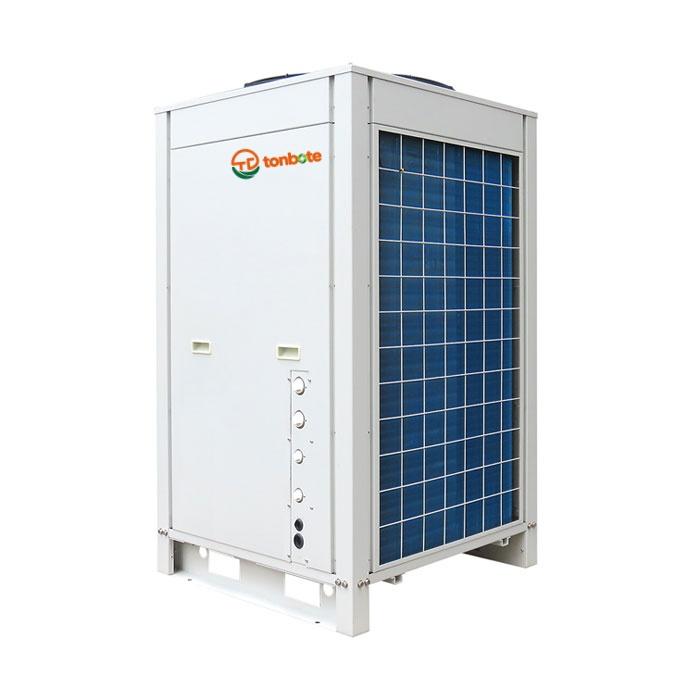
When a chiller, pump, or air handler has been running inefficiently for years, the instinct to swap it out for a new unit with identical capacity is strong. After all, it worked—sort of. But oversized equipment rarely fails because it's too small. It fails because it cycles constantly, never reaches optimal load, and wears down components through short-cycling. Dropping in another oversized unit simply resets the clock on the same problems, while locking in higher energy bills and more frequent maintenance for another decade or two.
A smarter approach starts with questioning the original sizing assumptions. Loads change over time: a building may have added insulation, upgraded windows, or reduced occupancy. Modern controls and variable-speed drives can handle partial loads far more gracefully than older fixed-speed equipment. By rightsizing to actual current demand—or slightly under with the ability to stage or modulate—you gain longer runtimes at peak efficiency, better humidity control, and lower peak electrical demand. It's not about doing more with less; it's about matching the machine to the real work.
That said, rightsizing isn't a call for radical downsizing without data. It requires a careful look at load profiles, diversity factors, and future flexibility. The point is to avoid the lazy default of "same size, new box." In almost every retrofit, there's an opportunity to reduce capacity safely, improve part-load performance, and cut both upfront and operating costs—if you're willing to question the original spec instead of repeating it.
Modular Retrofit Phasing Without Tenant Downtime
Retrofitting an occupied building often feels like performing surgery while the patient is awake. The key is breaking the work into discrete, repeatable modules that can be executed floor by floor or zone by zone. Each phase is scheduled around the tenants' actual usage patterns, so construction noise, dust, and utility interruptions happen only when the space is least sensitive to disruption.
A common approach is to use temporary partitions and dedicated vertical chases for mechanical and electrical runs. This allows new systems to be installed in a vacant swing space first, then cut over tenant areas one at a time during off-hours or planned short windows. Because each module is tested and commissioned before the next one starts, failures are contained and do not ripple across the entire property.
The result is that tenants never face a forced relocation or a prolonged period without heating, cooling, or power. Instead, they experience a series of brief, well-communicated interruptions that are often shorter than a routine maintenance window. This phasing strategy keeps lease income flowing while the building is quietly brought up to modern performance standards.
After Retrofit, Check Airflow or Watch Savings Disappear
After a retrofit, the temptation is to assume the new equipment will deliver its rated performance. But unless you actually measure airflow at key registers, you can end up with a high-efficiency unit that's moving less air than the old one. Dirty coils, poorly sealed ducts, or even a miswired fan speed can quietly erase the expected energy savings.
A common problem is that the retrofit increases filter density to protect the new coil, but nobody accounts for the extra pressure drop. The fan may slow down, rooms get stuffy, and the system runs longer to satisfy the thermostat. Simple tools like a powered flow hood or a hot-wire anemometer can reveal these issues in minutes. If you skip this step, the savings only exist on paper.
Heat Pumps That Actually Work in Cold Building Stock
Older buildings often get written off as poor candidates for heat pumps, but that assumption falls apart when you look at how modern cold-climate units handle sub-zero conditions. Instead of struggling to pull warmth from frigid outdoor air, these systems use enhanced vapor injection and variable-speed compressors to maintain full heating capacity well below freezing. The result is a steady, comfortable indoor temperature without relying on backup electric resistance strips, which used to be the dirty secret of many heat pump installations in colder regions.
The real challenge isn't the technology itself but matching the right system to the quirks of an existing structure. Many older buildings have radiators designed for high-temperature water, while heat pumps are happiest producing lower-grade heat. That's where careful sizing and the use of buffer tanks or high-temperature heat pump models make the difference. In practice, a well-executed retrofit in a drafty brick apartment building can outperform a poorly planned installation in a new build, because the design work accounts for thermal mass, air leakage, and the actual heating load rather than a generic rule of thumb.
Another overlooked factor is the building's own thermal inertia. Heavy masonry walls and thick plaster ceilings, common in pre-war stock, hold heat long after the sun goes down or the outdoor temperature drops. When paired with a heat pump that ramps down rather than cycling off, this creates a surprisingly efficient rhythm: the pump runs longer at a lower output, the walls absorb and release warmth gradually, and the indoor temperature barely wavers. That steady, low-intensity operation is exactly what cold-climate heat pumps are engineered for, and it's why the supposed mismatch between old buildings and new heat pump tech often turns out to be a myth.
Beyond the Utility Bill: Tracking Real Retrofit Payback
When most people think about retrofit payback, they look at the drop in the monthly utility bill — and then stop there. But that number hides more than it reveals. A cheaper energy bill is just the first layer; it doesn't capture how a retrofit changes the way a building behaves under different weather loads, or how it shifts maintenance cycles and indoor conditions. To see the real return, you need to track what happens after the first year, not just during it.
Start by separating weather-normalized savings from raw bill differences. A mild winter can make a retrofit look great or terrible, depending on the baseline. Then add the items most spreadsheets leave out: fewer repair calls, longer equipment life, less tenant turnover, fewer complaints about drafts or dampness. These have real dollar values, but they show up in operational budgets and lease renewals — not in the utility statement.
The trick is to build a simple tracking sheet that logs not only energy use but also comfort metrics, maintenance events, and even occupant feedback. After two or three years, you'll see a pattern that the utility bill alone never shows. That pattern is the true payback: lower total cost of ownership, more predictable operations, and a building that works better for the people inside it.
FAQ
It starts with replacing or upgrading major heating and cooling components—like chillers, air handlers, or controls—using equipment designed and built by an original design manufacturer to fit the building's existing layout. The goal is to boost efficiency without tearing out everything.
Smart controls allow the system to respond to real-time occupancy, outdoor temperatures, and energy prices. Instead of running on fixed schedules, the equipment adjusts output continuously, which cuts waste in zones that are empty or already comfortable.
ODM gives more flexibility in matching physical constraints and performance targets. You can request specific coil sizes, fan configurations, or communication protocols so the new equipment works with what's already installed rather than forcing expensive duct or piping changes.
Detailed load calculations using current occupancy and equipment data. Many teams reuse old design assumptions, which leads to oversized units that short-cycle and waste energy. A proper audit often reveals the building needs less capacity than originally installed.
By separating ventilation from heating and cooling demand. Demand-controlled ventilation brings in fresh air only when CO2 or occupancy sensors call for it, and energy recovery wheels capture heat from exhaust air. This keeps air fresh without paying to condition unnecessary outside air.
Continuous monitoring catches performance drift early. If a chiller's efficiency drops or a damper sticks, the data shows it before the next utility bill. That allows for small corrections instead of expensive emergency repairs.
Many regions offer utility rebates for high-efficiency equipment, and some have tax deductions tied to measured energy savings. The exact programs vary, but a good retrofit plan should include an incentive review because it can shorten the payback period by years.
For a mid-sized building, expect 3 to 6 months from audit to commissioning. Larger or phased projects can stretch to a year. The timeline depends on equipment lead times, whether the building stays occupied, and how much ductwork or piping needs to change.
Conclusion
Many ODM HVAC retrofit projects stumble at the very first step by copying old equipment nameplate ratings instead of measuring the building's actual heating and cooling loads. This leads to a second, related mistake: installing another oversized unit because the previous one was also too large. The smarter play is to commission a proper load analysis that accounts for occupancy patterns, internal gains, and envelope upgrades. From there, a modular retrofit strategy can be phased in without shutting down tenant spaces—replacing one chiller or air handler at a time while keeping the rest of the system running. This approach reduces both capital risk and disruption, and it lets you right-size each component based on observed performance rather than guesswork.
Even after a well-planned retrofit, the savings won't materialize if you skip airflow verification. Many projects end up with duct leakage, unbalanced zones, or wrong fan speeds that quietly eat into efficiency. Before declaring victory, measure actual CFM at diffusers and adjust accordingly. For buildings in cold climates, don't assume any heat pump will do—look for cold-climate models designed to maintain capacity at low outdoor temperatures, and pair them with envelope improvements to reduce the backup heating load. Finally, real payback isn't just the utility bill drop. Track maintenance costs, occupant comfort complaints, and equipment runtime to see the true return on your ODM retrofit investment. Otherwise, you're flying blind with a spreadsheet that flatters the project but ignores hidden losses.
Contact Us
Contact Person: Wanshu Chen
Email: [email protected]
Tel/WhatsApp: +86-13662871206
Website: https://www.mbcee.com