MNS Switchgear Company Delivers Reliable Low-Voltage Power Distribution Solutions
2026-10-13
Low-voltage power distribution rarely gets the attention it deserves—until something trips, flickers, or fails. That's exactly why MNS switchgear has earned its place in demanding facilities. MOLDVOLT brings that proven MNS reliability to your power distribution setup, keeping operations smooth and predictable. That reliability is not accidental—it comes from specific design choices we will unpack below.
Why MNS Low-Voltage Switchgear Earns Its Reputation for Reliability
The MNS low-voltage switchgear line has built its name on one simple premise: it keeps working when others falter. In facilities where downtime translates directly into lost revenue, engineers repeatedly turn to this design because it handles thermal stress, short-circuit conditions, and everyday operational wear without demanding constant attention. The busbar arrangement and compartmentalized construction reduce the likelihood of arc faults spreading, while the modular drawers slide in and out smoothly even after years of service. That kind of mechanical predictability is rare in low-voltage equipment, and it is exactly what plant managers remember when budgets come up for renewal.
Part of that reliability comes from how the MNS platform manages heat and clearances. Instead of packing components tightly to save floor space, the design leaves deliberate room for air movement and cable routing. This cuts down on hot spots that gradually degrade insulation and trigger nuisance trips. Maintenance crews also appreciate that each functional unit can be isolated and tested without shutting down an entire feeder — a practical detail that prevents small issues from turning into unplanned outages. The result is a switchgear assembly that rarely surprises anyone during an infrared scan or a routine breaker exercise.
Longevity, however, is not just about robust materials or conservative ratings. It is about how well the system tolerates real-world mistakes: a dropped tool, an overloaded branch, a missed torque check. MNS components are built with enough margin that these events do not immediately cascade into failure. Replacement parts remain straightforward to source and install, so aging installations can be refreshed rather than scrapped. That combination of forgiving design and serviceability is why so many critical facilities — hospitals, data centers, water treatment plants — continue to specify the platform decade after decade, even when newer options appear on the market.
Modular Design That Shortens Installation and Future Expansion
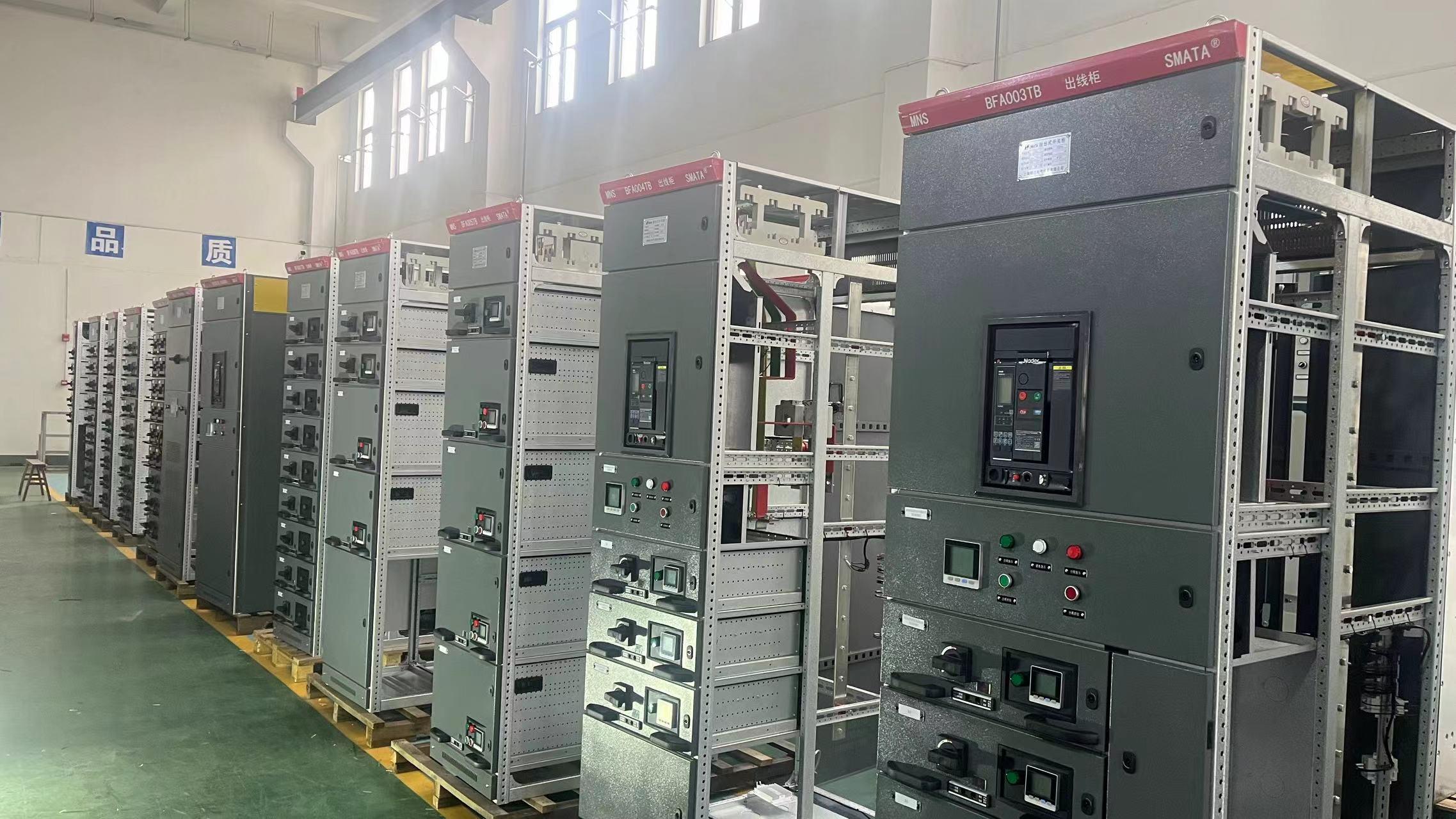
Traditional installations often drag on because every component has to be assembled and aligned on site. With a modular approach, most of that work shifts to the factory floor—panels, connectors, and subsystems arrive as pre-built units that click into place in hours rather than days. The result is less time with scaffolding up and fewer skilled labor hours burned on repetitive tasks.
Expansion becomes a matter of adding another block instead of tearing down walls or re-running entire cable trays. You simply reserve space in the original layout, keep the interface points standardized, and later slot in new modules when demand actually shows up. That avoids overbuilding today for capacity you might never need.
This kind of design also reduces risk. Because every module follows the same dimensional and connection language, upgrades feel less like surgery and more like swapping a battery. Downtime shrinks, budgets stop bleeding into overtime, and the system grows with your operations instead of forcing a painful forklift upgrade every few years.
Fault Protection That Keeps Downstream Equipment Safe
In a power distribution chain, a single fault can cascade into costly damage if left unchecked. Fault protection devices act as sentinels, interrupting abnormal currents before they reach sensitive loads. By opening the circuit within milliseconds, they prevent thermal and mechanical stress from spreading to motors, drives, and control panels downstream.
This protection goes beyond simple overcurrent interruption. Modern systems monitor for phase loss, ground faults, and voltage anomalies, coordinating selective tripping so only the nearest upstream device reacts. That isolation keeps healthy sections energized while the faulted branch is safely de-energized—minimizing downtime and protecting capital equipment from reverse-fed or transient damage.
How MNS Panels Perform in Utilities, Data Centers, and Heavy Industry
MNS panels earn their keep in utility substations by handling the messy reality of switching surges and uneven load distribution without flinching. The busbar design uses a sandwich construction that keeps short-circuit forces low, so breakers and metering compartments stay put even when a feeder trips unexpectedly. Operators appreciate that the draw-out units slide in and out without tools, which means a failed relay can be swapped during a routine inspection rather than forcing an unplanned outage.
Data centers bring a different kind of pressure: heat and harmonics. MNS panels manage both by allowing dense packing of intelligent motor control units and power monitors without sacrificing airflow. The vertical busbar is split into sections, so a harmonic filter or capacitor bank can be added to one column while other columns continue feeding critical loads. That flexibility avoids the dreaded “forklift upgrade” where entire switchgear lines have to be replaced just to add capacity.
In heavy industry, the panels face dust, vibration, and the occasional arc flash. MNS enclosures use reinforced frames and gasketed doors, but the real value is in the internal separation. Busbars, cable compartments, and device compartments are partitioned with metal barriers, so a fault in a motor feeder doesn’t cascade into the control wiring. Maintenance crews can isolate a single bucket, lock it out, and work on the starter while the rest of the process line keeps humming.
Thermal Management That Prevents Hotspots and Extends Component Life
Heat doesn't spread evenly on its own. Left unchecked, concentrated thermal load creates micro-hotspots that degrade solder joints and accelerate electromigration. The solution here pairs a vapor chamber with variable-density thermal interface material, drawing energy away from high-flux zones before it can pool.
That balancing act matters more than peak cooling numbers. By shaving off localized temperature spikes, the board stays within a tighter thermal envelope, which reduces mechanical stress from repeated expansion and contraction. Components simply see less wear over years of cycling.
The payoff shows up in field data: fewer early failures, less derating under sustained load, and a longer window before performance drift becomes noticeable. It's less about blasting fans and more about keeping every watt moving in the right direction.
Busbar Layout Options for Space-Constrained Electrical Rooms
Tight electrical rooms force a shift away from conventional flat bar runs. One practical option is the sandwich busbar system, where conductors are clamped between insulating sheets and housed in a slim metal enclosure. This stacked configuration drops the overall footprint by 40 percent or more compared to open air-insulated bars, making it suitable for narrow switchrooms or retrofit projects with limited ceiling clearance. The reduced phase-to-phase spacing does demand careful thermal checks, but modern epoxy or polyester insulation handles heat buildup better than older materials.
Another route is the tiered or stepped layout, which uses vertical offsets to gain extra ampacity without widening the busway. By positioning the bars in a stair-step profile, installers can route connections through tight corners and around structural columns while keeping bend radii within safe limits. For rooms where wall space is scarce, end-feed and center-feed tap-off boxes can be placed on the same axis as the main run, avoiding the need for side clearances. This keeps aisle widths open and shortens cable drops to downstream panels.
FAQ
The design focuses on modularity and tested components, so installations hold up under continuous load without frequent adjustments. Withdrawable units let teams swap feeders or starters quickly, which keeps downtime minimal.
Heavy manufacturing, data centers, water treatment, and commercial buildings. The common thread is a need for stable distribution where a single outage can ripple across operations. MNS configurations fit tight electrical rooms and can be expanded as loads grow.
Technicians can isolate a single drawer or compartment without shutting down the whole board. That means routine checks, fuse replacement, or adding a new feeder happen during a short window rather than a planned shutdown.
Yes. Communication modules and metering options are built into many configurations, so operators can track load profiles, energy consumption, and fault events from a central interface. It avoids bolt-on monitoring that often gets ignored.
Internal separation up to Form 4, arc-resistant options, and mechanical interlocks. The goal is to protect personnel during operation and maintenance, not just to meet a checklist. For instance, breaker compartments are isolated so accidental contact with live parts is rare.
Busbar systems allow additional outgoing feeders or motor control units to be added without replacing the entire switchboard. Many users start with a base configuration and scale up as new equipment comes online, which stretches capital budgets.
After site measurements and load schedules are confirmed, panels are assembled and tested in the factory. Commissioning usually includes insulation resistance tests, trip unit verification, and a dry run of interlocking sequences before energization.
The withdrawable unit approach speeds up installation because connections land on terminals rather than requiring hardwiring of each device. It also reduces errors during upgrades, since a replacement unit can be pre-tested on a bench before being inserted.
Conclusion
MNS Switchgear has earned a strong position in low-voltage power distribution by focusing on the practical demands of facilities that cannot afford unexpected downtime. The system’s modular construction does more than simplify initial assembly—it allows installers to complete switchboard setup with fewer on-site modifications and gives facility managers a clear path for adding feeders or rearranging load groups later. That same modularity supports selective fault protection: each outgoing circuit is isolated by its own protective device, so a short circuit or overload in one branch is cleared locally without tripping upstream breakers or damaging connected equipment. This selectivity keeps downstream motors, drives, and control panels safer, and it reduces the troubleshooting time needed after an event.
Field performance in utilities, data centers, and heavy industry shows how the design holds up under continuous load and confined spaces. Busbar layout choices—horizontal, vertical, or a combination—let engineers fit the switchgear into existing electrical rooms without sacrificing access for maintenance. Thermal management is treated as part of the structural design: ventilated compartments and deliberate busbar spacing guide heat away from high-current joints, preventing hotspots that would otherwise accelerate insulation aging and contact wear. For operators, that translates into longer intervals between inspections and fewer thermal-related failures. MNS panels therefore deliver a balance of protection, adaptability, and thermal control that many low-voltage switchgear suppliers struggle to match in a standard product range.
Contact Us
Contact Person: Hellen
Email: [email protected]
Tel/WhatsApp: 86-13634205622
Website: https://www.voltcabinet.com