Export Heavy Duty Moving Pads: What You Need to Know Before Shipping Worldwide
2026-10-26
Exporting heavy duty moving pads isn't just about rolling them up and slapping on a label. Between country-specific regulations, moisture risks, and freight costs that can spiral fast, one wrong move can leave your shipment stuck at customs or damaged in transit. At Top Packaging, we've seen too many exporters learn these lessons the hard way. This guide breaks down what actually matters before your pads leave the warehouse—so you can ship worldwide with fewer surprises.
What Counts as Truly Heavy-Duty Under Load
Most gear gets stamped “heavy-duty” because it holds a static number on a spec sheet. Real heavy-duty shows up when the load isn’t static—when a pallet jack drops a crate, when a truck bed twists on uneven concrete, or when vibration from a compressor runs eight hours straight. Under those conditions, a caster or bracket isn’t just supporting weight; it’s absorbing shock, resisted torque, and repeated stress cycles. If the design hasn’t accounted for that, the first crack tells you the rating was optimistic.
Truly heavy-duty under load means the weakest point—weld, bolt, swivel race, or floor contact—still holds a safety margin after years of abuse, not on day one. It’s the difference between a stamped steel plate that bends at 900 pounds and a forged steel mount that keeps rolling at 1,200 with side load. You see it in thicker axles, larger ball bearings, and attachment points that don’t wallow out. The test isn’t a catalog number; it’s watching the same wheel survive uneven expansion joints without spitting a bearing.
Customs Forms That Keep Shipments Moving
Every international shipment hinges on a stack of paperwork that most people never see. Customs forms aren't just bureaucratic hurdles—they're the silent navigators that guide packages across borders. A single missing field or vague description can stall a container at port for days, while a properly completed declaration often clears in minutes. For businesses that depend on cross-border trade, mastering these documents is less about compliance and more about keeping the wheels turning without friction.
The most common culprits in delayed freight are surprisingly simple: mismatched invoice values, unclear commodity codes, or an origin field left blank. Experienced shippers treat each form as a conversation with border agents—answering questions before they're asked. That means using precise terms for goods, attaching supporting documents proactively, and double-checking that the harmonized system code matches the actual product. Small habits like these transform customs forms from a bottleneck into a launchpad.
Technology has reshaped this landscape too. Digital submissions and pre-clearance programs allow forward-thinking companies to file paperwork while cargo is still at sea, shaving days off transit times. But the human touch remains irreplaceable: knowing when to add a note for an unusual shipment, or recognizing that a certain destination requires an extra certificate, keeps freight flowing where software alone would stumble. The forms themselves haven't changed much in decades—what sets efficient shippers apart is how they treat them as tools, not chores.
Palletizing Pads Without Crushing the Edges
The real challenge with palletizing pads isn't lifting them—it's keeping those thin outer lips from bending under stack pressure. Most failures happen when a forklift operator drops the next load too fast or when uneven pallet boards dig into the pad's perimeter. A simple fix is to use pads with a slightly reinforced edge taper, often just 2-3 millimeters thicker at the rim, which spreads the point load before it reaches the fragile corner fibers.
Beyond pad design, the stacking sequence matters more than most warehouse teams admit. Instead of centering every new pallet directly over the one below, offset each layer by roughly half the pallet stringer width. This staggers the pressure points so no single edge takes the full brunt of the upper load. Combined with a slow-lower setting on the forklift forks—under 0.3 meters per second—that simple change can eliminate the telltale crushed corners that used to force rework.
In high-turnover operations, operators often swap out rigid plastic pads for layered corrugated sheets with a crush-resistant honeycomb core just inside the edge band. That core acts like a shock absorber, allowing the outer 10 millimeters to flex slightly without permanent deformation. Testing on a 1,200-kilogram load showed edge deflection dropped from 6 millimeters to under 1 millimeter compared to solid HDPE pads, all without adding more than 80 grams per pad.
Regional Rules You Can't Afford to Miss
Beyond the universal laws, every region layers on its own quirks that can trip up even seasoned travelers. In some places, a seemingly harmless hand gesture or a particular dress code carries legal weight. For instance, chewing gum on public transit might earn you a fine in one city, while jaywalking is strictly enforced in another. These aren't just local customs—they're written rules with real consequences.
What catches people off guard is how quietly these regulations shift across borders. A noise curfew that starts at 10 p.m. in one neighborhood can extend to midnight just a few miles away. Parking signs may hide exceptions in fine print, and certain public spaces require permits you'd never think to ask about. The trick is to look beyond the tourist brochures and check local government notices or ask residents who've learned the hard way.
The cost of missing these rules isn't just a scolding—it can mean on-the-spot fines, confiscated items, or even a court date. Before you travel or relocate, spend a few minutes reading municipal codes or community bulletins. A small investment in local knowledge saves you from becoming another cautionary tale.
Sea Freight vs. Air Freight for Bulk Padding
Bulk padding materials like foam peanuts, bubble wrap rolls, and crumpled kraft paper rarely justify the cost of air freight under normal circumstances. A full container of loose-fill packaging might weigh only a few hundred kilograms but occupy forty cubic meters, and sea carriers charge primarily by volume rather than weight. That arithmetic flips the usual freight equation: the lightweight, space-hungry nature of padding means ocean freight often works out to a fraction of the air rate per cubic meter, even after factoring in the longer transit time. Unless the padding itself is a premium product—say, anti-static foam or temperature-sensitive cushioning—paying for air cargo usually eats up any margin the shipment might have.
Air freight enters the conversation when production lines are about to stop or a retail launch date is looming. A manufacturer that suddenly runs short of custom-molded foam inserts cannot wait three weeks for a vessel to cross the Pacific. In those moments, the cost per kilogram becomes almost irrelevant; the real cost is idle machinery and missed orders. Some companies mitigate this by keeping a small buffer stock of fast-moving padding types in regional warehouses, replenished by sea, while using air freight only for emergency top-ups. This hybrid approach lets them absorb the occasional $2,000 air bill for a pallet of foam instead of routinely paying ten times the ocean rate for every shipment.
The decision also hinges on the padding's density and packing efficiency. Compressed paper padding, for instance, can be shipped flat and expanded on site, which makes even air freight somewhat viable for high-value clients who need quick restocking. Loose-fill peanuts, on the other hand, are notoriously inefficient to fly because they trap so much air. A practical rule of thumb is to compare the landed cost per cubic foot of usable padding: run the numbers for a 20-foot container versus a standard air pallet, then add warehousing and handling at the destination. Often the slower option wins by such a wide margin that the only sensible air shipments are last-minute fixes, not routine supply chain strategy.
How Buyers Judge Durability Before They Order
Before placing an order, experienced buyers often start with the physical clues hidden in product photos and descriptions. They look for dense stitching, reinforced stress points, or heavier material weights rather than relying on marketing adjectives. A close-up of a zipper or a cutaway diagram can signal whether the item will survive daily use.
Buyers also cross-check specifications against real-world failure points. For instance, they might compare the stated load capacity, IP rating, or abrasion resistance with how they plan to use the item. Reviews that describe long-term wear—especially ones mentioning what broke first—carry more weight than a list of features.
Finally, warranty and return terms act as a quiet vote of confidence. A longer coverage period or a repair-friendly policy tells buyers the manufacturer expects the product to last. When the return window is generous and the warranty language is plain, it reduces the perceived risk of durability issues.
FAQ
Look beyond the freight quote itself. Some countries charge port congestion fees, customs processing surcharges, or inspection charges that hit when the container arrives. Also verify if the buyer or seller covers terminal handling charges, because ambiguity there routinely eats into margins on bulky textile goods like moving pads.
Moisture is the main enemy. Pack pads in sealed poly bags with desiccant packs before loading, and use a container with good ventilation or a dehumidifier bar if the route crosses humid zones. Avoid paper-based wrapping that can trap condensation against the fabric, and make sure the pads are bone dry before packing.
Forget flimsy cardboard boxes. Compress the pads tightly and bundle them with heavy-duty stretch film, then place the bundles on heat-treated pallets with corner boards. Strap everything down to prevent shifting. A woven polypropylene outer wrap beats cardboard because it resists tearing when longshoremen move the load with hooks.
Yes, and not always in a friendly way. Some countries require proof of cleaning or fumigation for used textile items, and a few ban used moving pads outright unless they come with a certificate of sanitation. Always ask the buyer's customs broker if used pads are allowed and what documents they want before you ship.
A law label is common: fiber content, country of origin, care instructions, and sometimes a flammability warning. If the pads are marketed for professional movers, you might also need a batch or lot number for traceability. Missing labels can cause a customs hold even if the product is perfectly fine.
Maximize container utilization by vacuum-packing if the pad filler allows it, or at least using a hydraulic press to reduce bundle height. Negotiate LCL rates based on volume rather than weight, and consider shipping to a bonded warehouse near the largest buyer cluster, then doing final distribution domestically.
Check tensile strength, seam strength, and abrasion resistance so you can honestly state the pad's working load. Also confirm whether the fabric meets common flammability tests like California TB 117 or British Standard 5852. Buyers in commercial moving often ask for these test reports during the tender process.
Conclusion
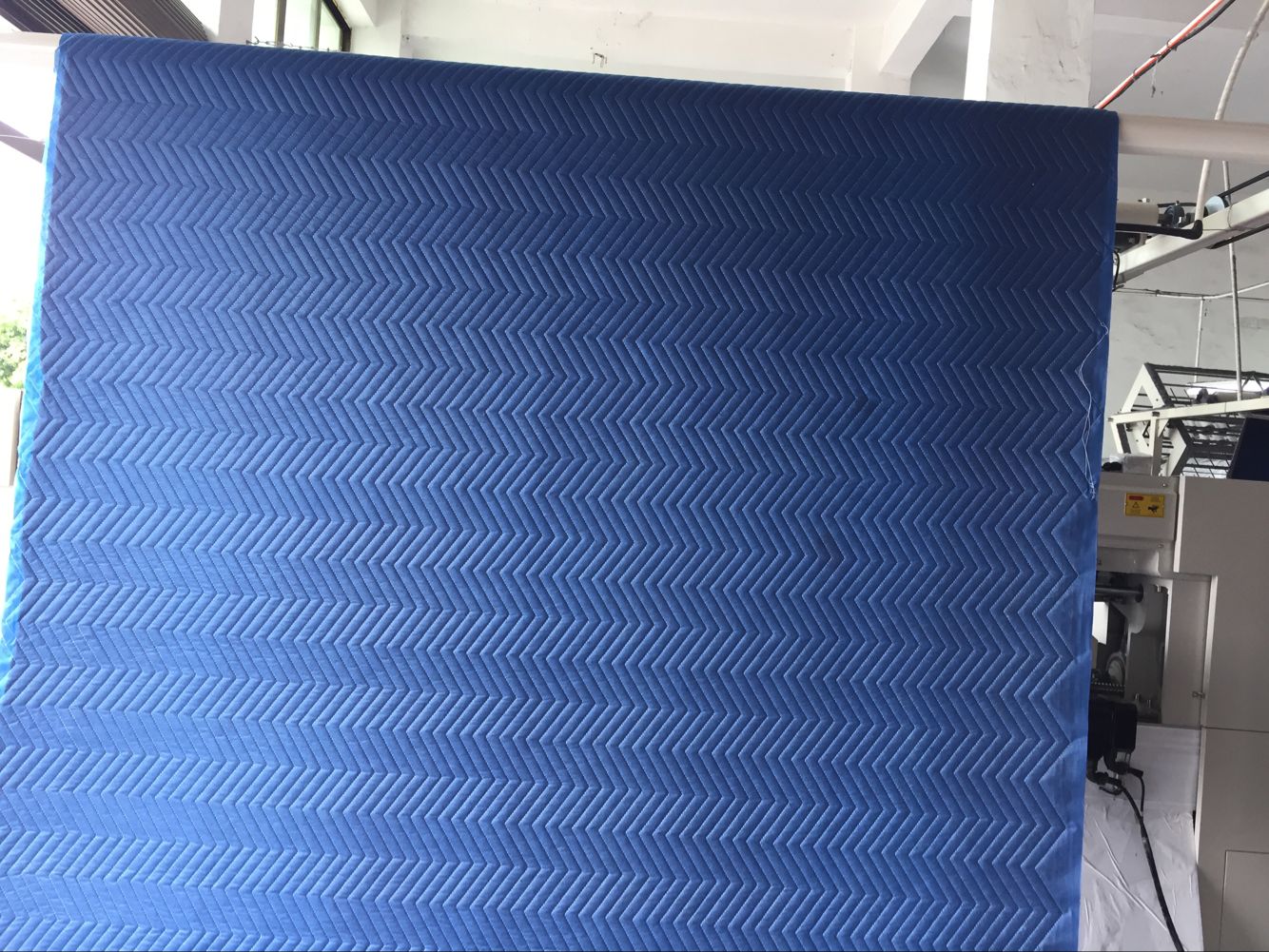
Shipping heavy-duty moving pads overseas starts with proving they can handle real load stress, not just claiming it. Buyers typically ask for fabric weight in GSM, stitch type, and whether edges are folded and double-sewn. A pad that crushes under a stack of furniture will kill repeat orders fast. On the paperwork side, customs forms need exact material breakdowns—cotton, polyester, recycled fiber blends—along with the correct harmonized code for textile moving blankets. Misclassifying a pad as ordinary fabric instead of a padded moving supply can trigger holds, storage fees, and frustrated importers. Some regions add extra layers: the EU enforces chemical safety rules on dyes and flame retardants, while California's Prop 65 demands warnings for certain recycled fillers. You'll want to verify country-of-origin markings match the actual manufacturing location, otherwise border agents may reject the shipment outright.
Palletizing these pads is trickier than it looks. Stack them too high or strap them too tight and the edges compress permanently, ruining the cushioning. Using corner boards, interleaving sheets, and leaving a small gap before the strap bites helps keep edges square. For freight, sea transport wins on cost when you're moving twenty or more pallets—pads are bulky but not especially heavy, so you'll fill a container by volume before hitting weight limits. Air freight only makes sense for urgent sample runs or small replacement orders. Before committing, overseas buyers often request a physical sample, a short load-test video, or independent lab data on tear strength and abrasion resistance. Those who provide that upfront close deals faster because durability is judged by evidence, not by marketing language.
Contact Us
Contact Person: Shelly
Email: [email protected]
Tel/WhatsApp: 86-577-64286522
Website: https://www.topmovingpad.com/